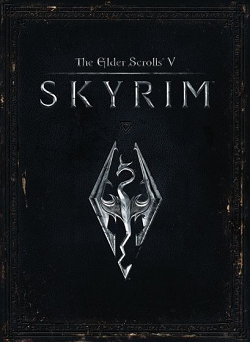
As a veteran of mostly linear Role-Playing Games (RPGs) dating back to the Super Nintendo "Golden Era" of RPGs (see: Final Fantasy VI, Chrono Trigger, Earthbound, etc.), I was initially turned off when I found that Skyrim gives players no true direction (with the exception of the Dragonborn path that can loosely be called the "main story"). Being a gamer from this era has trained me to think that there should always be a main plot that I follow at my leisure. Not that having options is a bad thing; the BioWare series Dragon Agehandled this "choose-which-adventure-you-want-to-pursue-in-any-order" style very well. And Skyrim is similar in that I can also choose any quest I want to tackle at any time, but in this case, I don't have to do any of it at all, and for completionist like myself, this concept is overwhelming -- there is too much to do. And in some cases, it's not always that interesting. But that's okay because you can always skip the boring stuff, as I learned.
After about 25 hours of playing Skyrim, boredom began to set in. I took a week-long break and then came back to it, and after a week off, I found that my problem was that I was comparing Skyrim to every other RPG I've ever played, which was my mistake. This isn't really an "RPG" as I know it. Instead, Skyrim is more of wandering "adventure," and from that perspective, I really started to enjoy the world that was created for me. I put another 40 to 50 hours into the game (totaling around 80 hours play time overall) before I was more or less forced to quit the game for good (more on that later).
The world of Skyrim is a massive, filled with snow-topped mountains, dragons, and about a dozen or so other types of monsters that are just waiting to be slain because you are the last Dohvakhin (a human with dragon blood that can both speak with and slay the beasts), and you wield a plethora of weapons and magical powers in any combination you like. You can choose any "class" you prefer, be it a mage, warrior, thief, archer, or any other typical RPG standard. The game allows you to experience your adventure from the first-person and third-person perspectives (but it's obvious based on the lack of fluid character animation that the developers intended first-person play).
My overall experience with Skyrim has been a mixed bag. At times, I was amazed by what Bethesda had put together, and at other times, I felt like they just took the easy way out. Now before you start lighting your torches and grabbing your pitch forks, let me explain. It's obvious that a game of this scale takes a lot of work and an insane amount of development time, but my time scouting through Skyrim was lacking something. While you will find more attention to detail to the environment in this game than possibly any other game out there on the market (with the exception of maybe Grand Theft Auto VI or Red Dead Redemption), there are some other important details that were never even considered. For example, despite the amazing environment, the citizens of Skyrim are absolutely boring, and the animations are stale at best. Not once did I get a believable performance from any character in Skyrim. Not every game has to have superb voice acting or facial character mapping like the way L.A. Noire did, but it would be nice if (1) the characters' mouth and head movements matched the conversation that they are speaking and (2) Bethesda hired more than the same 10 to 15 voice actors to speak every single person you interact with in this game. There were cases where I spoke with two different people in the very same town, and they had the exact same voice. (Maybe they were twins? I don't think they were supposed to be since they looked nothing alike). Again, you can fall back on the same crutch that "this project is such a large scale sandbox game," but really, it's kind of a bummer when a game is more interesting while your character hikes through the woods than when he or she interacts with the characters that progress your quest.
The city awaits you but you'll find much more interesting things out in the wilderness.
But the real sore spot that made me quit the game was the glitches. I can't stress how disappointing it is to spend 80 hours on a game that breaks to the point you can't complete certain quest lines. Again, with a project of this scale, a few hiccups are bound to happen (just do a simple search for "Skyrim glitches" on YouTube to see what I mean), but it really shouldn't if Bethesda is actually dedicating a decent amount of time to play testing and debugging. If the company's previous games are any indication, then it does not. And that's ultimately was what stopped me from playing Skyrim. The game was broken for me after all that time.
To sum up, there are good things and bad things about this game; it's hard to give a solid "yes" or "no" if I were asked to recommend Skyrim, but I would lean towards "it's worth a try" because there are a lot of good things unfortunately mixed in the with the bland and bad. The truth is: Skyrim is a beautiful world to explore; I was amazed by the beauty of the virtual Nordic world; the incredible detail from the smallest snow flakes to the grand, towering mountains is a lot to take in -- it leaves a lasting impression. But also, I was annoyed by the lack of direction and development given to the citizens and villains within this amazingly detailed world. That opinion never really changed as I played through Skyrim: pretty world, pretty boring people in it. I never once felt attached to the lead character that I created; he was just an empty shell that I used to get from point A to point B. But the longer I played Skyrim, the less I cared about its individual characters and the more I cared about the one "character" that matters the most — the world of Skyrim itself ... at least up until the game broke it, and my adventure abruptly was suspended forever.
My Recommendation: Give it a try, but be patient
(and save often to avoid nasty glitches)
One of the greatest things about video games today are the achievements (on the Xbox 360 console; for PS3 owners, the technical term is "Trophies", but it's basically the same thing). For those who are very familiar with the concept, achievements are essentially a check list of your progress throughout a game; they can be obtained through the milestones of the storyline you play, they can be earned by completing high scores and conquering pivotal feats, they can even be entirely random objectives that have nothing to do the game other than to serve as a "wink to the camera" from the game developers. Nearly all achievements have a score assigned to them; the more you earn, the higher your total Gamerscore accumulates. A quick glance at a gamer's achievement list will help you determine which games they liked and which ones they spent the most time with (based on the number of achievements they have earned.) Therefore, your Gamerscore and the achievements are fundamentally a good reference for most gamer's habits (or as a good friend of mine jokes, "I long list of 'dork points' for bragging rights.")
And he's right.
Achievements are a list of shiny gold stars. They say things like "You managed to complete this game on Insane Nightmare Punch-your-Grandma Mode with out snapping your controller in half" or "You got a perfect score dodging every explosive weasel thrown at you" or even "You figured out how to save the world. Twice." And why not be a little proud now and then? You earned it, and you have the proof right there in your achievements history. Yes, achievements can be a small reminder that not only you enjoyed that grand adventure you went on, but also that you were pretty damn good at it too!
With that in mind, I thought to myself "Wouldn't it be cool if you could earn video game-like achievements in real life? And if so, what would they be like?". That's when I came up this neat little poster that I designed. I was happy with the final result and thought I'd share it with you:
Category:Arcade Developer:Halfbrick Studios Released: August 10, 2011 Platform: Xbox 360 (Kinect only) Price: 800 msp ($9.99) Also on: iOS, Android
The pain in my arms and shoulders make me feel like I was hit by a bus yesterday, and I don't regret it hardly at all (well, maybe just a little bit). This past weekend, I had some friends visiting, and we decided to make the impulsive Xbox Live purchase of Fruit Ninja for a quick dose of lazy entertainment but lazy is about as far from the truth as you can get.
If you own an iPhone or an Android phone, you've probably already played or at least heard of Fruit Ninja since it was an app in those respective app stores long before the Kinect version was released last year. For those of you who haven't tried Fruit Ninja on the Kinect before, here is the general break down: You face your television while an array of fruits are thrown up onto the screen. The goal is to flail your arms about in an attempt to slice as many fruits as possible; the more fruits you cut in one slice the better your combo and score. There are also bombs that detract from your score, and there are multipliers along with a few other bonuses that can be obtained to further your high score. You slice by waving your hands as if you are making Karate chops (and you'll find you do this naturally, even without meaning to). Matches run about a minute at a time, depending on the mode you are playing. If your Kung Fu is strong, you will earn a high score. It sounds simple, and it is, and it is definitely one the most fun party games I've ever played.
Fruit Ninja's graphic style is simple and colorful. It's very easy to pick up and play. There are a few different modes besides the classic style including challenge mode and two player co-op and versus modes. Those can get dangerous if you don't watch out; I nearly took out my pal more than once since my living room is, at best, an average size (not a lot of flailing room). Even better the developers decided to add little extras that you can unlock such as different "blades" that show up when you slice (the fire hands are my favorite), different backgrounds, and different player outlines. Also, the achievements are always appreciated, and the avatar awards are cute (free costumes and gear for your avatar characters). My avatar is currently wearing a full Kung Fu outfit like a true Sensei.
You can slice your fruit like a true warrior now.
As mentioned before, you will get tired and possibly sore if you play a lot at first. I played enough this weekend that I woke up Monday morning feeling like I had done a full upper body workout at the gym, so there is potential there to play as a supplement to a regular workout routine (if you're interested in that). On the downside, the navigating the menus can be annoying since you can't use the controller; I had quite a few accidental replays due to rogue hand motions that the Kinect sensor picked up. Also, I would have loved to have some background music, but you get so caught up the in game (and each match only lasts a minute or so) that you never really notice the quiet anyways. All minor complaints especially for a $10 game.
It's nice to find a game that really takes motion controls and makes something special and fun. As I pointed out in my previous Anti-Review of Legend of Zelda: Skyward Sword, motion-controls can sometimes make or break a game, but Fruit Ninja takes a simple concept and makes something both easy to play and challenging at the same time. Some will be a bit put off by this title because you can buy this game on your smartphone for less than a fifth of the price on Xbox Live, but at $10, it really is a great game to own for parties (or even work outs). Plus, on the Kinect, the experience is completely different than the app and can be appreciated in a different way. I also should point out that if you decide to purchase the Kinect title Gunstringer, you get Fruit Ninja for free. So there are many different ways to pick up this fun title.
If you own a Kinect, you really should own this fun little game, just make sure you have an heating pad for first few days, but if you are unsure, I recommend trying out the free demo first. You can get the demo to Fruit Ninja here.
Anti-Reviews are written for situations where I've played a game, yet for one reason or another (probably because of frustration), I never completed the game. As a gamer, I don't feel I can validly review a game I haven't played in its entirety any more than I can review a movie I haven't finish watching. I do feel, however, that I have spent enough time with the title to give a detailed opinion about the experience and whether or not this game might be more entertaining for you than it was for me. These are my thoughts...
I really wanted to like The Legend of Zelda: Skyward Sword. I mean, I REALLY tried. It's not a bad game by any means, in fact, it's a great game. It's fun. It's clever. It made me smile many times with its fresh take on solving common puzzles. But it also made me angry. And made me want to punch my television. And made me want to snap my controller in half. All of this frustration stemmed from the fact that I have to swing my arms at just the right angle with an inferior piece of equipment that may or may not work depending on my distance from the television, whether there is signal interference from my cell phone, whether it's cloudy outside, whether if I'm wearing blue socks, or whether my cat sneezes. Okay, some of those are made up, but really, there's no way to know when an identical motion will work or when it won't. That's a major flaw that I don't specifically attribute to the team that developed Skyward Sword, but rather to the designers of the Wii itself. But then again, both of those teams are Nintendo, and it still made this game unbearable for me.
Category:Action Role-playing Developer:Nintendo Released: November 17, 2011 Platform: Nintendo Wii (Motion Plus adapter/controller required) Price: $49.99
Perhaps some background would help? I love The Legend of Zelda series. Way back in 1986, the original Super Mario Bros. might have lured me into video games, but it was the gold-cartridge classic The Legend of Zelda that really hooked me. The general concept hasn't really changed. You play as Link, a young elfish guy cloaked in green who picks up and sword, shield and various other tools along the way such as bow & arrows, bombs, a boomerang, etc. Link is a "chosen by the gods" hero who always has an epic quest that involves about eight or nine dungeons themed around diverse elements (Fire Dungeon, Water Temple, etc). It's not usually an Academy-award-winning plot, but it's familiar and encouraging enough to make you want to save the world of Hyrule over and over again with each new iteration. With the exception of the last three original portable games (Minish Cap, Phantom Hourglass, and Spirit Tracks), I've played every single entry to date, each more than once. I say this because I don't want to give the misconception that I think Zelda games are childish or easy; this series is very much the opposite of what the Wii has painted itself as—the casual, child/soccer-mom gaming machine. No, the Zelda series has always been dear to me, and that's why I write this article with such a heavy heart—because Nintendo has given me an ultimatum: either play with our gimmicky motion controls or walk away. And after several attempts at the former (at first open-mindedly and later begrudgingly), I was forced to choose the latter.
Motion controls are a fickle gimmick because as a supplement, they can be very entertaining; if you've ever played Metroid Prime 3: Corruption, Super Mario Galaxy, or The Legend of Zelda: Twilight Princess [Wii version] you'll notice that those games play predominately with a standard controller combination and any motion controls are for specific puzzles and implementing unique tools such as whipping a grapple beam (Metroid), balancing on a ball (Mario), or aiming a bow and arrow (Zelda). The opposite is the focus of Skyward Sword: the motion controls are the dominate feature. Every sword strike, every shield block, every tool aimed and every camera angle turn is done so with motion controls; the only action you use the analog stick for is walking. Now the concept is actually pretty cool initially. You are essentially sword fighting on a 1:1 ratio. When your arm moves in the physical world, Link is mimicking that movement in-game. This allows new puzzles and problems that can only be solved by slicing at a specific angle or thrusting the sword as a key into a lock, and so on. While this play-style is exciting at first, after a few hours of game play, some major problems arose for me:
"If the controller would have just worked like it was supposed to..." was a phrase I repeated many times while playing this game.
In my experiences, the controller is not 100% accurate; many times I would swing at a 45 degree angle as indicated on the screen, but Link would swing vertically. This may sound like a minor detail, but when you're facing a dungeon boss five times your size and you're on your last few hearts, being able to hit that critical weak spot is crucial. As any gamer will tell you, one of the most rage-quit frustrating things is to succumb to an untimely defeat through no fault or miss-step of your own. "If the controller would have just worked like it was supposed to..." was a phrase I repeated many times while playing this game.
Because of your sword-swinging range, every monster you run into becomes a time-consuming mini-battle because you have to block or attack a specific way, every time; it gets tiresome when you're just trying to cross a location to pick up a heart piece or find a room you missed. Before I finally gave up the game, I was running from more enemies than fighting them just to get where I was going.
After about 30 to 45 minutes of playing a game that involves swinging around an imaginary sword, believe it or not, your arm gets tired and it's hard to find a comfortable sitting position because you have to keep standing up/sitting forward. Not to mention, playing this game for more than an hour brings on the "nagging-parent-effect": the game will notify you every 30 minutes to take a break and go outside to play. (Thanks Nintendo, but I'm an adult, plus it's raining.)
The novelty of swinging a sword and aiming a slingshot eventually wore off for me. After that, I found myself fighting with my controls more than with my dungeon bosses. I had to re-calibrate the controller often. When I began to ask myself "what else is there that's new in this game besides the 'swing this way' or 'rotate that way,'" I discovered a lot of the older tasks from previous games have been dumbed down. For example, when you "play songs" you don't play music note patterns like in Ocarina of Time or Wind Waker, you just wave the remote back and forth in tempo, which just looks ridiculous.
There is no option to play with a standard control scheme. Why is this? In Legend of Zelda: Twilight Princess you could swing the sword vertically or horizontally with different button combinations. (Granted it should become more complex when you are considering a full 180 degree spectrum to swing in, but in my experiences everything was basically a 0, 45 or 90 degree slice or stab). This lack of option ultimately was (almost literally) the game breaker for me.
This is how the controls are supposed to work—most of the time.
For a company that seems to focus solely on casting a the widest net possible across various gamer types, be it casual or hardcore (ex. by including "cheat" game options that allow the game to complete difficult levels for you; see the "Super Guide" function in Super Mario Galaxy 2 or Super Mario Bros. Wii), it's almost stupid that there is no option to play with a traditional controller setting. Apparently Nintendo's target audience is now a specific group of gamers, mainly those who prefer motion controls, because what other option do you have? The answer is "none."
"About that time, something just snapped, and I realized I was tired of "putting up with" this control scheme just so I could see what would happen next."
My playtime in The Legend of Zelda: Skyward Sword ended after about 40 hours of game play. I was about to enter the sixth dungeon when I was given an escort quest (the bane of any gamer's existence). That length of time should tell you more than just "I picked up this game once and tried it but didn't like it"; I was well over half way through the game and spent some considerable time doing side quests too. About that time, something just snapped, and I realized I was tired of "putting up with" this control scheme just so I could see what would happen next. That's crap. I paid $49.99 (plus tax) for this game and it is supposed to be a form of ENTERTAINMENT for me, not frustration. It's not a movie I "had" to sit through with my wife or a book I "had" to read for class, it's a game I chose to play for fun. And don't get me wrong, it was fun at times, but it wasn't worth playing through 40 hours, much less the additional estimated 20 to 30 more that I would need to complete it, if I couldn't have the option to play the game the way I wanted to, like, I don't know, EVERY other game ever made up until this point.
For better or worse, I'm missing out on the rest of this adventure, and it's a shame (and on a personal level, depressing) because there are a lot of great features about Skyward Sword that I did enjoy. The inventory system had a complete overhaul—it's much easier to pick which item you want to use without pausing the game. The soundtrack is fully orchestrated and sounds beautiful. An item crafting/upgrade system has been implemented for building better shields. You can roll bombs like a bowling ball like in Wii Sports. The flying beetle item is one of the most interesting tools to use (and yes, because it is implemented with motion controls). The boss battles are some of the coolest I've ever seen in a Zelda game, maybe even in any game at all. (The fourth dungeon boss, Koloktos, is a clever battle that will stick in my mind for a long time, despite how I feel about the rest of the game.) Heck, I didn't mind the new visual impressionistic art style (despite that it looks jagged and crappy on any modern television due to lack of support in HD picture quality). What I do mind is that Nintendo has bullied me out of playing my favorite game series by forcing motion controls on me. That may or may not change in the future, but as far as my experiences with The Legend of Zelda: Skyward Sword go, it's not a game I can comfortably recommend to anyone. My response when asked if someone would like this game would be "it really depends on your preference of motion controls".
I won't say that The Legend of Zelda: Skyward Sword is a bad game because that's simply not true. Far from it—it's a great game that was designed for gamers who love motion controls. It's just disappointing to me that I don't happen to be in that category and not for lack of trying. If you own a Wii and you've loved everything motion controlled thus far, then it's a no-brainer; you should try this game. But for everyone else that's on the fence or unsure, I have listed the factors that stood out the most to me, but ultimately I'll leave it up to you to decide whether or not you'd appreciate this Zelda (and if so, hopefully more than I did):
I can't make a recommendation, so you have to decide:
You might enjoy Skyward Sword if...
You like the idea of swinging a sword and shield with 1:1 motion controls for a 70-to-80 hour adventure (and have the dexterity to do so).
You are deeply interested in the lore of the Zelda series as this is supposedly the "origin" to the entire series; it chronologically predates every other game.
You are looking for something completely new and different to the Zelda series that has a lot less in common with previous Zelda games like Ocarina of Time or Twilight Princess.
Long, drawn-out quests and side stories are your thing; dungeons take a lot longer to get to and feel less traditional.
You might hate Skyward Sword if...
You prefer playing with a regular controller or you think that your motion controls should be limited to a "neat feature" instead of your primary source of input.
You are used to playing your games in HD picture quality (even with the stylized art, the game's jagged edges and flat textures stand out).
You are accustomed to vocal characters in your RPG/adventure games; Link, nor any other character, are voice-acted (really? it's 2012 guys), so be prepared to read a lot of dialogue.
You don't like backtracking and fetch quests; you do that a lot in this game—at least three times for each of the main dungeons.
...but if these two ridiculous bills, known as the Protect IP Act (PIPA) in the Senate and the Stop Online Piracy Act (SOPA) in the House, pass it would censor the Web and impose harmful regulations on the entire internet. This blog would be considered copyright infringement, just by posting a picture of, or even referring to a video game (which is copy righted material.) I just started this blog and I'd really like to keep at it, it's fun, it's informative and it's my right as a citizen to express my feelings and opinions on great video games. At what point does censorship end?
Even posting this video about censorship would be censored; wrap your head around that...
I urge you to sign this petition via Google not only so that I can keep up this video game review blog, but so that the internet itself is not permanently crippled.
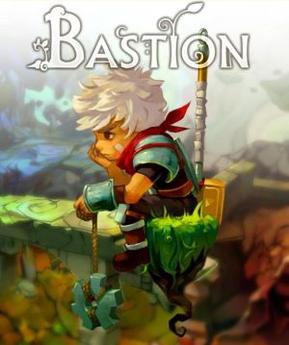
Category:Action Role-playing Developer:Supergiant Games Released: July 20, 2011 Platform: Xbox Live Arcade Price: 1200 msp ($15) Also on: PC, Google Chrome
If you're looking for a simple, yet elegant experience that treads the line between comfortable game play and creative style with just the right amount of atmosphere, then Bastion might be an experience that will grab a hold of your attention for a brief and unique adventure.
Bastion is your typical isometric perspective action role-playing game (RPG), but from the start you'll notice something different that makes Bastion stand out in your mind; nearly every action you take in the game is verbally described by a somber yet genuine narrator. The narration is slightly dynamic for a smaller scale game such as this; on several occasions when I had to re-enter a level, the narrator vocalized that I was attempting my 3rd or 4th try to complete it. Another example is when you fall off a ledge (which happened to me a lot) the narrator takes notice and comments - it's a neat idea that really gives Bastion its own distinctiveness.
From the start of the game, you are introduced to the playable character only referred to as "The Kid" by the aforementioned narrator. The Kid wakes up to find that the world around him (known as Caelondia) has fallen apart due to the "calamity" and he must be the one to put it back the way it was. While The Kid is traversing the various environments, the ground literally forms up beneath him as if the world is being rebuilt as he moves. Guided by the narrator, The Kidd eventually finds the Bastion, a safe haven for the survivors of Caelondia; this area essentially becomes a home base of for The Kid as he goes out in search of a solution to put the world back together. While the overall story of the game is not terribly deep, I did found myself pondering what the final result of my actions would be, and the final conclusion left me with a few interesting choices to make.
The artistic direction of Bastion is what I would describe as a colorful, yet darker impressionist-like painting—similar in manner to what's being described about the more recent game Legend of Zelda: Skyward Sword. The unusual creatures and the environments of Bastion are well detailed for a game that uses a distant, pulled back camera perspective. Visually, the game art reminds me of a much more recent version Final Fantasy Tactics, with anime-like character styles in the cut scenes while using a smaller and simpler character models for the main action of the game.
The soundtrack is another standout feature for this game. Bastion has a very crisp and diverse soundtrack; from the comforting sounds of the acoustic guitar pieces that play while The Kid is safely confined in the Bastion, to the high tension moments that resonate when facing swarms of enemies out in the wilds; the music just seems to fit the right mood at just the right time. Feel free to preview a few samples of the Bastion Original Soundtrack (Amazon MP3 Store) and start with track number three to see what I mean.
The Kid takes on various monsters with his trusty Carbine Rifle.
Game play in Bastion is fairly simple, but with some interesting changes as you progress through the game. Early on, you obtain a hammer and soon after a crossbow, which are assigned to the X and B buttons, respectively. The Kid also gains a shield on the left trigger which can be used to reflect some well-timed counter attacks. Opposite your shield on the right trigger you have a secret attack move (which can be swapped out with more than 20 others as you collect them) that have a limited number of charges until the meter is depleted or refilled. And of course, you have your standard health bar and experience point meter as you gain levels. As you progress through the story, you unlock more diverse and powerful weapons to swap out (Carbine Rifle, Machete, etc), and as you level up, you gain more access to "Tonics" which are applied status improvements, such as carrying additional health items or receiving less damage from falling, and so on. As if this wasn't already enough, the developers went the extra mile and made all of the weapons upgradeable, and they added specific challenges for each weapon to max out The Kid's arsenal. This definitely adds a true completionist goal for players that are interested in additional play throughs. Oh, and then there's a new game plus mode as well, which, in case you’re unfamiliar with the term, means that you can play the story again with all of your upgraded equipment and items. (Always a great feature for players who want to complete everything or just want to enjoy the story once more at a leisurely pace.) The developer Supergiant Games really went the extra mile with features, and it shows in the game quality.
A typical play through of Bastion may run you anywhere from 6-10 hours depending on how quickly or relaxed you play (I think I completed my first play through at around 8 hours with around 75% completion), but with the New Game Plus option and the incentive to collect all of the items and achievements, you could easily double that. Bastion doesn't fall in the "too short" mentality as it lasts long enough to tell a story and ends before it has time to become repetitive or before its charm begins to fade. Bastion is a game that can be appreciated for what it is: a fantastic little adventure with strong narrative thanks to a great team of developers.
I'm ready to "prescribe" a few good games for you to play.
I'm not a professional writer. Heck, I wouldn't even call myself a "writer" at all. I just like video games. A lot. I feel that the term "video game" is dated misnomer. "Interactive experience" seems more accurate based on what you get when you play games these days. While in the past your objective may have been as simple as "save the princess," today these experiences may be fully scripted, may cast famous voice actors, may provide orchestrated music, may emerge you in fully interactive worlds, and at times, the story may change your opinion on a subject or even leave a lasting impression on you, much like a great book, television show, movie or album. Video games are just another awesome form of digital entertainment, and it just happens to be the one that I'm most passionate about, so with that in mind, I’ve decided to blog about the video games that, to me, stand out most in the industry.
There are possibly thousands of game review websites out there. I know, as I frequent a lot of them myself. I don't claim to be the next Joystiq, Kotaku, or IGN, nor would I expect any of my opinions to carry that sort of weight. My intent is to blog from the perspective of just another regular guy who has been playing games since the original Nintendo Entertainment System (NES) and never really stopped appreciating them for the immersing form of entertainment that they are today.
Games that I take the time to review are the ones I think everyone should have an opportunity to experience (or unfortunately, in some cases, avoid.) With this blog, I want to express my feelings, concerns and opinions on games that have made some sort of impression on me and that I think that you will consider worthy of your time. I look forward to any constructive comments (or criticism) and hope that you will enjoy reading. And if you do enjoy it, please share it with others who will as well. Thanks!
(My first review, Bastion for Xbox Live Arcade, will follow this post later today.)